By Todd Bensman as published October 20, 2026 in The Daily Signal
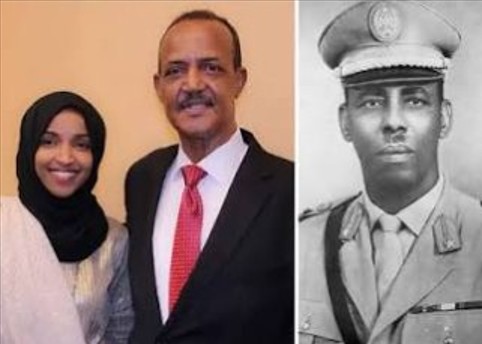
The Trump administration’s ongoing fraud probe into Somali-born Rep. Ilhan Omar’s refugee and U.S. citizenship approvals carries much more importance than many Americans realize as this political theater unfolds in a mid-term election season.
The Omar affair highlights an underlying homeland security problem about the other 150,000 other Somali refugees let in before Donald Trump closed the Somali pipeline spigots and, most pertinently, about the thousands more hoping to get through after his 2029 departure.
The Omar investigation should serve as a flapping red flag reminder to Americans that Somali refugees are more uniquely able to commit mass immigration fraud with impunity than almost any other nationality on the planet.
The consequences of that distinction matter to Americans because, when Somalis do lie to get in, they bring elevated risks of public welfare fraud and gang crime.
But perhaps most aversely: Islamic terrorism.

The pivotal moment in Somalia’s history with enduring US security implications
The unlikely reasons why Somali immigration poses especially problematic public safety threats like these are the same as why past U.S. investigations into Omar’s immigration have not yet produced criminal charges: the December 1990 overthrow of Somali dictator Mohammed Siad Barre.
From the day warring factions overthrew him to about 2013, a pure state of anarchy prevailed in the Muslim-majority Horn of Africa nation. No government existed, let alone a vital records office, to issue birth certificates, driver’s licenses, diplomas, passports, and marriage or divorce documents. No local, state or federal law enforcement agencies existed to book or prosecute criminals and create a criminal history database that visa adjudicators (or today’s criminal investigators) could ever cross-reference.
No central government intelligence service existed to build computerized datasets of known fighters of armed groups like the U.S.-designated Islamist terrorist organization Al Shabaab, which still rules large swaths of Somalia and draws recruits among Somalis in neighboring countries such as Kenya’s refugee camps.
Plenty of atrocity-committing warlords, clan paramilitary groups, and al-Shabaab recruited thousands of young Somali citizens and trained them to kill for religion. But these groups were not likely to keep computerized membership records.
It gets worse. Warring militias destroyed almost every pre-1991 citizen record going back generations. The information black hole persists, as the State Department describes on its Somalia web page in its General Documents section.
“Although the United States formally recognized the new government of Somalia on January 17, 2013, there continues to be no recognized competent civil authority to issue civil documents,” it reads, in part. “There are no circumstances under which immigrant visa applicants can reasonably be expected to recover original documents held by the former government of Somalia.”
Impact on Omar investigations
Legacy U.S. media outlets have made much of the fact that past U.S. investigations of Omar and her family’s immigration claims did not produce facts or charges, as though because of innocence. But these accounts omit Somalia’s disappeared-records history. If American adjudicators found routine refugee vetting pretty much impossible, unimaginative criminal investigators could not have gotten far unraveling Omar family mysteries.
Consider: the U.S. Department of Homeland Security and justice departments are looking into whether Omar’s now-deceased father falsely claimed she was young enough in 1995 to get automatic derivative refugee status for minors. They’re investigating if her father covered up his own disqualifying military resume as a full colonel and military commander in the Siad Barre regime, since its “Black SS” and commanders systematically tortured regime enemies and killed as many as 200,000 people.
Will investigators find birth certificates, drivers licenses, school enrollment documents or Barre regime military records? Of course not; investigators must get resourceful to find U.S. courthouse-worthy facts.
Then there’s the allegation that the congresswoman in 2009 married a biological brother named Ahmed Nur Said Elmi so that he could fraudulently gain immigration status. Was he an actual sibling? No one knows because, facing U.S. demands for information about that when he applied for a permanent green card, Elmi suddenly withdrew the application and moved abroad, the Washington Post reported. Surely these two know there’s no record of familial relationships back in Somalia. Their refusal to provide DNA refuting siblinghood has forced investigators to instead collect her trash.
The same fact-finding problems apply to every Somali but with broad public safety consequences of far more importance than Omar.
The domestic national security and public safety threats of Somali immigration
Before Trump cut off all Somali immigration in both of his terms, a terrorist fighter might as well sign his name as Mickey Mouse and list his profession as “cartoon figure entertainer” since no information exists to disprove these claims. This problem left U.S. adjudicators to just roll the dice letting in Somalis who offered whatever unverifiable name and narrative that might work in their favor.
Consider the case of Abdul Razak Ali Artan, who entered the U.S. as a refugee with his mother and seven siblings in June 2014 from a Pakistani refugee camp. When he was (maybe) 20 two and a half years later, on November 28, 2016, Artan used a Honda Civic and butcher knife to injure 11 fellow students on behalf of ISIS, triggered by a Burmese military reprisal against Rohingya Muslims a month earlier. A campus officer had to shoot him dead.
Public records indicated Artan had likely already radicalized as a jihadist and easily hid his jihadist proclivities from adjudicators. Sen. Charles E. Grassley later complained that U.S. adjudicators missed big clues during vetting, such as claims of al-Shabaab interactions, that should have spurred hard questions in Pakistan but didn’t.
Other Somali refugees allowed in later did get caught lying about their terrorism involvements back home and cost taxpayers unnecessary law enforcement time and prison resources. In his 2007 refugee application, Abdinassir Mohamud Ibrahim simply omitted the fact that close relatives were leaders in Somalia’s violent “Islamic Courts,” the U.S.-designated terrorist entity that later became al-Shabaab.
On his refugee application and later his green card and citizenship applications, Ibrahim lied that he was born to a peaceful clan, dodging questioning that would have disqualified him as a refugee. The FBI finally caught up to Ibrahim in San Antonio in 2014 for helping his terrorist friends back home recruit more terrorists. He sent cash too.
Somalia is so wiped clean of information that two Ethiopians, Mohamed Abdirahman Osman and Zeinab Abdirahman claimed they were Somalians, no doubt knowing checks with the records-competent U.S.-allied Ethiopian government would reveal they were dangerous al-Shabaab operatives.
Their 2013 refugee claim and later green card and citizenship applications falsely said al-Shabaab blew off both of his hands. They were living in Tucson in 2018 when the FBI finally discovered he was an active al-Shabaab explosives expert who lost his hands preparing bombs for the group to detonate. Furthermore, the FBI learned the couple’s extended relatives were Shabaab fighters and killers in specific attacks, including a brother who went on the run following a conviction and an uncle and aunt who carried out a deadly 2014 restaurant bombing in Djibouti. From Tucson, the couple had sent tens of thousands of dollars abroad to support these fugitives.
Another consequence of Somali resettlement is that they form culturally insulated enclaves that don’t assimilate well and pass old-country extremism to younger generations.
We know this, in part, because law enforcement has identified up to 40 Somali-American young men as having joined or attempted to join ISIS in Iraq and Syria. At least two dozen Minnesota enclave Somalis traveled to join al-Shabaab back in the homeland.
A standard-bearer was Somali-born Dahir Adan, who entered the U.S. as a two-year-old refugee. He went on to stab ten shoppers with two steak knives in September 2016 at the Crossroads Center shopping mall in St. Cloud, Minnesota before an off-duty police officer shot him dead. ISIS claimed Aden “was a soldier of the Islamic State.”
Another assimilation failure was Abdirahman Sheik Mohamud who was a toddler when he resettled with his family in Columbus, Ohio. Years later as a 20-year-old, in 2013, he and his older brother, Abdifatah Aden became jihadists. After graduating from Ohio State University, Aden joined the al-Nusra Front in Syria.
Mohamud came up with a plan to join Aden that involved first applying for U.S. citizenship for ease of traveling more freely with less notice. After swearing the oath, Mohamud traveled to the combat zone and, upon learning his brother died in combat, returned with a plot to attack a federal prison in Fort Worth. The FBI arrested Mohamud on his way to Fort Worth in November 2018.
View the forest above the trees
Somali citizens no doubt suffered persecution and can’t return home because of ongoing dangers. But any look beyond the political theater of the Omar investigation should tell us that piercing the secrets of Somalis is rarely possible. Which means letting this group into America to live is strictly for the gamblers. In this regard, the safe bet with Somalis is to just say no.
Leave a Reply